We use cookies to make your experience better. To comply with the new e-Privacy directive, we need to ask for your consent to set the cookies. Learn more.
 info@hcwhealth.com
 01695 227300 MON-FRI 08:30-17:00
 FREE SHIPPING FOR UK ORDERS OVER £20.00 excl. VAT
Upper Arm Blood Pressure Monitor Rechargeable for Home Use, Adjustable Cuff and LCD Bright Display for Seniors, 20 Memory Groups Auto Inflation Accurate Blood Pressure Monitor
Rechargeable Upper Arm Blood Pressure Monitor for home use with adjustable cuff and clear LCD display. Features 20 memory groups, auto inflation, and accurate readings for daily monitoring.
SKU
ARMBP1
Special Price
£19.99
Regular Price
£24.99
In stock
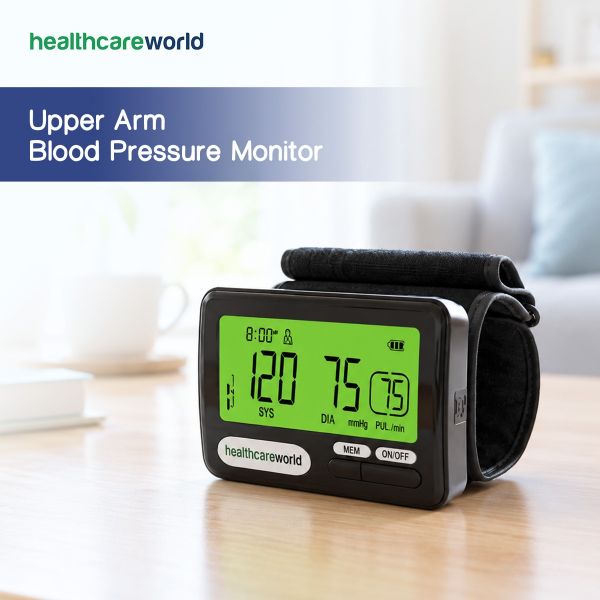
Healthcare World Rechargeable Upper Arm Blood Pressure Monitor
A rechargeable, highly accurate blood pressure monitor with upper-arm cuff — perfect for home tracking and long-term health management.
Why Choose Healthcare World DBP-6193 Blood Pressure Monitor?
-
Rechargeable & Eco-Friendly – USB-powered design eliminates disposable batteries—saving money and reducing waste.
-
Clinically Validated Accuracy – Advanced oscillometric technology and auto-inflation deliver precise systolic, diastolic, and heart rate readings.
-
Bright, Easy-to-Read Display – Large LCD is perfect for seniors or users with visual impairment.
-
User Memory Storage – Stores up to 20 readings per user—ideal for trend tracking.
-
Comfortable Adjustable Cuff – Fits the standard adult range; ensures accurate snug fit.
-
One-Button Operation – Auto-inflation and automatic shut-off simplify every reading.
-
Portable & Durable – Compact size for home, office, or travel use.
Key Applications & Benefits of DBP-6193 BP Machine
-
Daily Home Monitoring – Track morning and evening readings to catch early signs of hypertension Cleveland Clinichomemedical.thedacare.org+2Health+2Barron's+2New York Post+4AAFP+4Verywell Health+4
-
Hypertension Management – Empower users to monitor medication or lifestyle impact over time.
-
Clinical-Grade Readings – Backup reliable data for physicians’ consultations.
-
Bladder Support – Auto-inflation prevents overpressure for comfort.
-
Eco-Aware Choice – Rechargeable feature aligns with sustainable living preferences.
How DBP-6193 BP Machine Works
-
Easy Setup: Wrap cuff snugly around bare upper arm, 1–2 cm above elbow fold.
-
Press & Measure: One press inflates cuff, monitors blood flow, then displays systolic/diastolic + pulse.
-
Memory Log: Automatically stores latest 20 results.
-
Auto Power-Off: Saves power after inactivity.
Package Details Of DBP-6193 Blood Pressure Reader
-
Device Type: Digital, upper-arm, rechargeable monitor
-
Display: High-contrast LCD
-
Power: USB rechargeable battery
-
Cuff Size: Adjustable for most adult arms
-
Memory: 20 readings per user
-
Support: USB cable included; pouch for portability
-
Certifications: Clinically validated for accuracy
Commonly asked question about Blood Pressure Monitor
1. How often should I measure BP at home?
Guidelines recommend 2 readings, morning and evening, over 7 consecutive days to establish baseline data Harvard HealthHealthwww.heart.org+3AAFP+3Barron's+3.
Our device stores 20 readings, making trend analysis convenient.
2. How do I ensure accuracy?
-
Avoid caffeine, food, exercise 30 minutes before reading AAFP+6www.heart.org+6OHSU+6
-
Sit upright with feet flat, arm relaxed at heart level The Times of India+9MI Blue Daily+9Wikipedia+9
-
Wrap cuff over bare skin—not garments PMC+7Mayo Clinic+7OHSU+7
3. Which cuff type is best?
Upper-arm digital monitors are clinically recommended, avoiding wrist/finger models that can be inaccurate adctoday.com+15MI Blue Daily+15Health+15.
Our adjustable cuff ensures snug, personalized fit.
4. Why do readings vary?
Home readings offer more accurate cardiovascular risk profile and help detect white-coat and masked hypertension www.heart.org+15AAFP+15OHSU+15.
5. Is rechargeable okay?
Rechargeable monitors are as accurate as battery-powered ones, with better energy efficiency and reduced waste.
6. How to log and interpret results?
Take two readings, one minute apart, morning and evening over at least 3–7 days, then average Main Line Health+5AAFP+5www.heart.org+5.
Our memory storage and companion app integration simplify this process.
Ultimate Guide: Taking Accurate BP at Home
Proper home monitoring begins with correct technique. Follow these steps consistently:
-
Prepare
-
Avoid caffeine, smoking, alcohol or exercise 30 minutes before measuring (Mayo Clinic).
-
Empty your bladder and rest quietly for 5 minutes (Mayo Clinic).
-
-
Position Carefully
-
Measure Correctly
-
Take 2 readings, 1 minute apart in morning and evening for 7 days (www.heart.org).
-
Use the higher arm if there’s a consistent difference (Harvard Health).
-
Your Healthcare World BP Monitor simplifies this with auto-inflation and memory functions to ensure consistency.
Rechargeable vs Traditional BP Monitors
Rechargeable monitors are gaining popularity due to:
-
Sustainability: No disposable batteries means less waste.
-
Cost-efficiency: No ongoing battery replacements needed.
-
Convenience: USB-rechargeable—ready anytime.
Traditional models are functional, but fail in eco-friendliness and long-term savings. Our rechargeable design ensures reliable performance without compromise.
Understanding BP Readings: What 120/80 Really Means
When your monitor reads 120/80 mmHg, here’s how to interpret it:
-
120 = systolic pressure (heartbeats)
-
80 = diastolic pressure (resting phase)
Blood Pressure Categories:
| Category | Reading (mmHg) |
|---|---|
| Normal | <120 / 80 |
| Elevated | 120‑129 / <80 |
| Hypertension Stage 1 | 130‑139 / 80‑89 |
| Stage 2 Hypertension | ≥140 / ≥90 |
Tracking trends over time with our monitor’s memory feature helps catch rises early.
Avoid These 7 Common BP Monitoring Mistakes
Ensure accuracy by avoiding these pitfalls:
-
Measuring after food or caffeine (Mayo Clinic, eshonline.org, Verywell Health, PubMed, Lippincott Journals, The Times of India)
-
Talking or texting during readings (AAFP)
-
Crossing legs or slouching (Mayo Clinic)
-
Using an ill-fitting cuff (Health)
-
Placing cuff over clothing (Mayo Clinic)
-
Not resting before measuring (Mayo Clinic)
-
Taking only one measurement (www.heart.org)
Our monitor’s auto-inflation and guided cuff placement eliminate many errors.
How Often Should I Check BP?
Recommended frequency:
-
Initial Monitoring: 2 readings, morning and evening, for 7 days (www.heart.org, Wikipedia).
-
Ongoing Tracking: A few times weekly or before doctor visits.
-
For Hypertensive Patients: Every 10 days or as advised (AAFP, PubMed).
With storage for the last 20 readings, your device makes regular tracking seamless.
White-Coat & Masked Hypertension Explained
-
White-Coat Hypertension: High readings in office, normal at home—triggers often anxiety (Mayo Clinic, Wikipedia).
-
Masked Hypertension: Normal in office, high at home—can go unnoticed otherwise .
Home monitoring is vital to identify these conditions and avoid misdiagnosis or inadequate treatment.
Choosing the Right Cuff Size Matters
Incorrect cuff sizes lead to inaccurate readings:
-
Too small = falsely high readings
-
Too large = falsely low readings (Verywell Health, Health, Verywell Health)
The adjustable cuff on our monitor fits most adult arm sizes snugly, enhancing measurement precision.
Health Benefits of Regular BP Tracking
Consistent monitoring supports:
-
Early hypertension detection
-
Medication and lifestyle adjustment tracking
-
Reduced healthcare costs through proactive care
-
Prevention of serious outcomes like stroke or heart attack (Barron's, Verywell Health)
Empower your health decisions with our validated, easy-to-use monitor.
Travel with Your BP Monitor
Portable and stress-free travel monitoring:
-
Compact, with included travel pouch
-
Rechargeable design = no spare batteries
-
Quick, accurate readings—even on the go
Maintain health routine wherever you are!
| Brand | Healthcare World |
|---|
Write Your Own Review
We provide best customer service helping many customers

UK specialist healthcare supplier

Approved & safe medical devices

Drug FREE pain relief alternatives

Dedicated customer service